Home › Journal › Word searches and the brain
Puzzles & the mind
Are word searches good for your brain? What the research says
Possibly, but it has not been proven. One large study found that people who never did word puzzles scored lowest on thinking tests, a link rather than proof, and there is no evidence that word searches protect against dementia. Their surest gift is simpler: something achievable to share with someone you love.
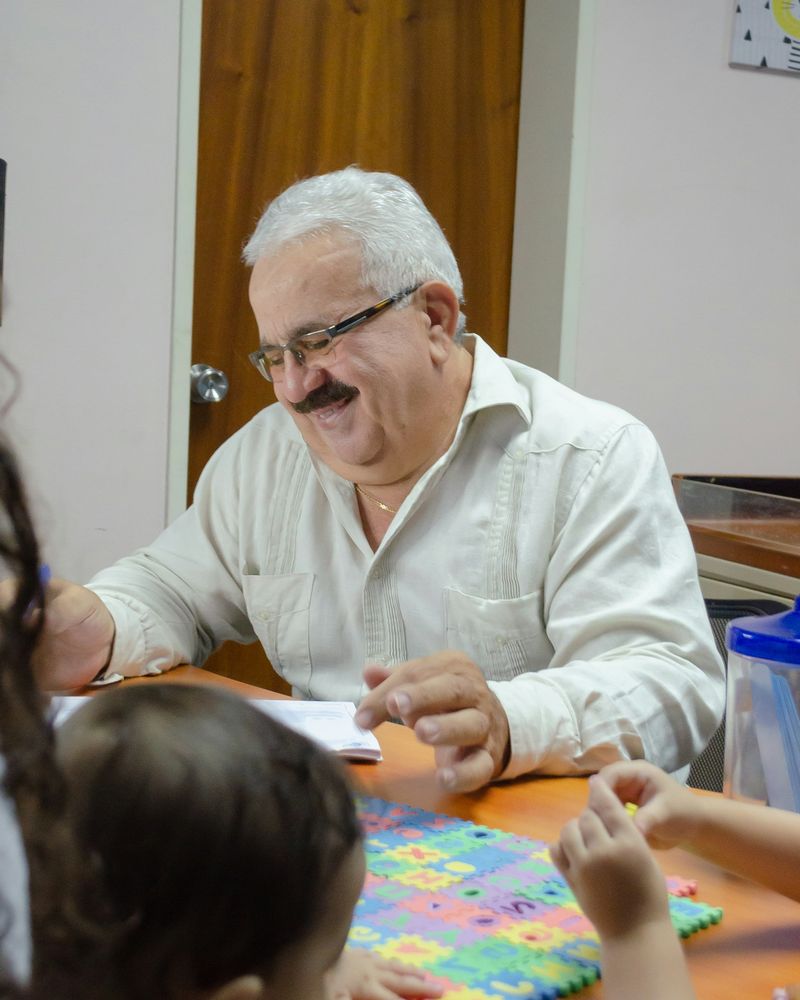
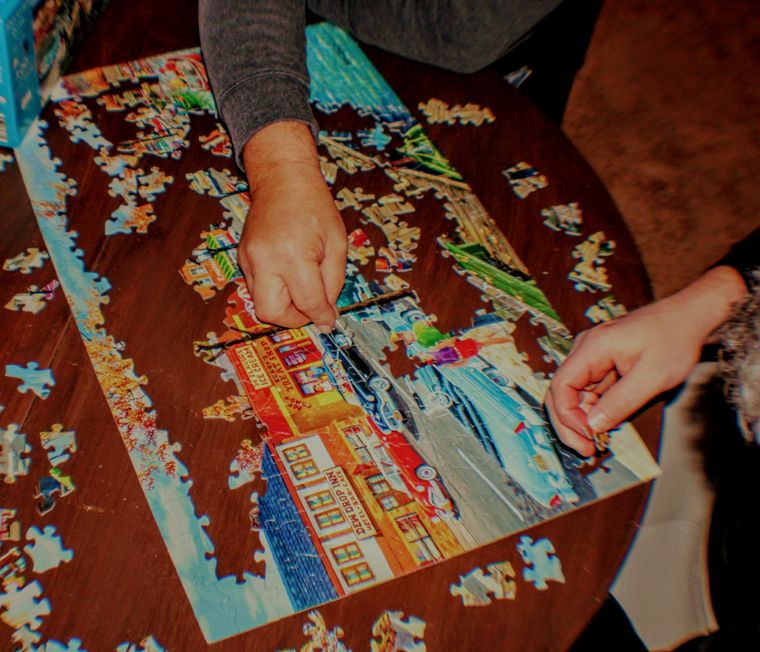
Picture a kitchen table on a Sunday afternoon. A mug of coffee going cold. A pencil with a chewed end. A grandfather running one finger slowly along a row of letters while a seven-year-old leans on his shoulder and whispers, “There! Backwards!” They circle it together. He pretends he had not seen it.
Is that good for his brain? It is a fair question, and puzzle-book covers are quick to say yes. We make large-print word search books, so you might expect us to say yes too. We would rather tell you what the research actually found. It is more interesting than the covers, and the honest version still leaves plenty of good reasons to pick up a pencil.
What the biggest study found
The largest study we know of on word puzzles and thinking skills comes from the PROTECT study in the United Kingdom. Researchers looked at 19,078 healthy adults aged 50 to 93, who reported how often they did word puzzles, from “more than once per day” to “never,” and took nine online tests covering attention, information processing, executive function, working memory and episodic memory.
On all 14 measures analyzed, how often people did word puzzles was significantly related to how well they scored, and those who never did them performed the most poorly. The team estimated that on a test of grammatical reasoning, regular word-puzzle users performed like people about ten years younger, and on short-term memory about eight years younger.
That sounds like a clear win. The researchers were careful to say it is not.
“We can’t say that playing these puzzles necessarily reduces the risk of dementia in later life.”
Dr. Anne Corbett, who led the research
The paper’s own conclusion is that future work needs to find out whether puzzles can actually change how thinking skills develop with age.
Why a link is not proof
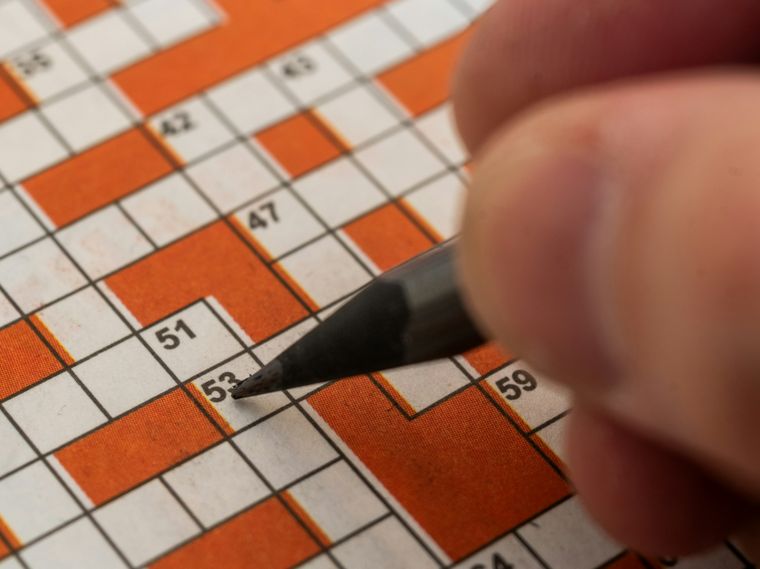
A study like this shows that two things travel together. It cannot show which one leads. People whose thinking is already sharp may simply enjoy puzzles more, and do them more often. People who puzzle daily may also differ in education, health, sleep or social life, and any of those could explain part of the gap.
There is a second wrinkle that matters to us. The study asked about word puzzles in general rather than word searches specifically, so it cannot tell us much about word searches on their own.
What a controlled trial found
Randomized trials, where people are assigned to an activity by chance, can say more about cause. One such trial involves crosswords. Researchers at Columbia and Duke randomly assigned 107 adults with mild cognitive impairment, average age 71, to web-based crossword training or computerized cognitive games: 12 weeks of intensive training, then booster sessions up to 78 weeks. On the main thinking test, the crossword group did better at both 12 and 78 weeks, and at 78 weeks it also did better on a measure of everyday functioning.
Two cautions come with it. The trial had no group that did no training at all, and the authors called for a larger trial with an inactive control group. And it tested crosswords, not word searches.
The U.S. National Institute on Aging strikes the same balance. Its advice for older adults carries a plain warning, “Beware of claims that playing certain computer and online games can improve your memory and thinking,” and it also says that staying engaged in meaningful activities may have important cognitive benefits, while noting that the evidence for lasting effects is not definitive.
The bigger picture: people, sight and sound
The 2024 Lancet Commission on dementia concluded that tackling 14 modifiable risk factors could prevent or delay nearly half of dementia cases. Social isolation in later life is on that list, as are hearing loss and, newly added in 2024, untreated vision loss.
Two practical things follow. A puzzle shared at the kitchen table is time spent with someone, which is worth having for its own sake; no study has tested whether sharing puzzles changes anyone’s dementia risk. And if someone you love is squinting at the page, mention it to their doctor or eye doctor. Large print is easier to read, but it is not a fix for vision changes that need care.
So what are word searches good for?
Here is what we can say with confidence, without overselling:
- They are achievable. Every word is there to be found. For someone who finds crosswords frustrating, that matters.
- They invite company. Two people can work one grid, reading words aloud, splitting the list, cheering the last find.
- They work across ages. A grandchild and a grandparent can solve the same puzzle as equals.
- They can be personal. A grid hiding the names of the people you love is a different kind of puzzle from one hiding vegetables.
How to make puzzle time count
Mix it up. Alternate word searches with crosswords, number puzzles or a jigsaw.
Make it social. Solve together on a visit or over the phone. Our Christmas activities with grandparents include a two-kitchens puzzle idea for long-distance families.
Make it easy on the eyes. Choose large print, good light and a comfortable chair. Our free large-print word searches print at home with an answer key.
Make it personal. Fill a puzzle with words that spark stories: grandchildren’s names, an old street, a favorite recipe. Our large-print word search with the grandkids’ names is built from the words you type, with big letters that run only across and down.
If you are worried about memory or thinking changes in yourself or someone you love, a doctor is the right first call. For everything else, go back to that Sunday table: pour the coffee, sharpen the pencil, and let someone else find the last word.
Questions people ask
Are word searches good for people with dementia?
Research does not show that word searches prevent, slow or treat dementia. Some people living with dementia enjoy puzzles, and a simple, large-print puzzle done together can be a pleasant shared activity. For anything about care or symptoms, talk to the person's doctor or care team.
Are word searches or crosswords better for the brain?
We know of no study that compares the two head to head. Crosswords have at least one randomized trial behind them: in a study of adults with mild cognitive impairment, crossword training did better than computerized brain games on a thinking test over 78 weeks, though there was no group that did neither. Word searches have been studied far less on their own.
Do word searches improve memory?
There is no direct evidence that word searches improve memory. In a large online study of adults over 50, scores on memory and reasoning tests were significantly related to how often people did word puzzles, and those who never did them scored lowest. It could not show that the puzzles were the cause.
How often should older adults do puzzles?
There is no research-based number. In the large study of adults over 50, people who never did word puzzles scored lowest, but that is a link, not a prescription. The best amount is the amount someone enjoys.
Where this comes from
- Brooker H, Wesnes KA, Ballard C, et al. “An online investigation of the relationship between the frequency of word puzzle use and cognitive function in a large sample of older adults.” International Journal of Geriatric Psychiatry, 2019;34(7):921–931. PubMed
- University of Exeter, “Regular crosswords and number puzzles linked to sharper brain in later life” (news release), May 2019. exeter.ac.uk
- Devanand DP, Goldberg TE, Qian M, et al. “Computerized Games versus Crosswords Training in Mild Cognitive Impairment.” NEJM Evidence, 2022;1(12). PubMed
- Columbia University Department of Psychiatry, “Crossword Puzzles Superior to Computer Video Games in Slowing Memory Loss in Older Adults with Mild Cognitive Impairment,” October 2022. columbiapsychiatry.org
- National Institute on Aging, “Cognitive Health and Older Adults,” content reviewed June 11, 2024. nia.nih.gov
- University College London, “Nearly half of dementia cases could be prevented or delayed by tackling 14 risk factors” (on the 2024 Lancet Commission on dementia prevention, intervention, and care), July 31, 2024. ucl.ac.uk
- Livingston G, Huntley J, Liu KY, et al. “Dementia prevention, intervention, and care: 2024 report of the Lancet standing Commission.” The Lancet, 2024;404(10452):572–628. doi.org