Home › Journal › Thanksgiving table games
Holidays together
Thanksgiving table games for families: 12 ideas for every age
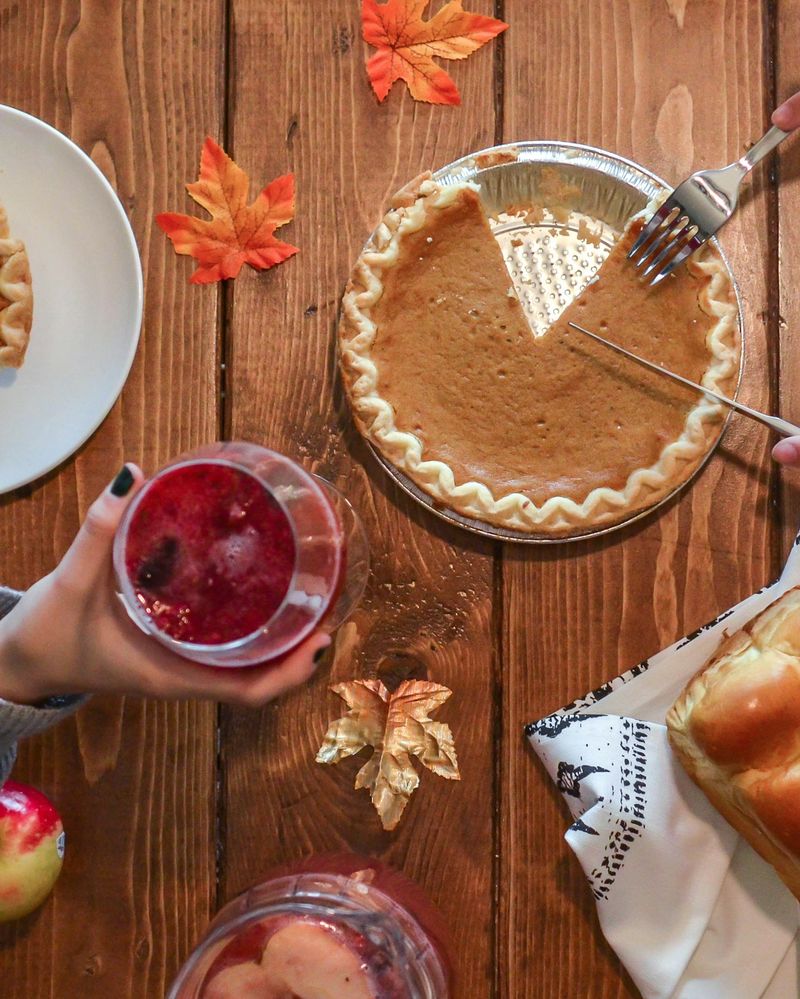
The best part of Thanksgiving often happens in the lull between the turkey and the pie. These twelve games fill it with laughter and old stories, and need little more than paper and a pen.
Picture the moment. The plates are pushed back, someone has loosened a belt a notch, and the pie is still cooling on the counter. Your uncle is reaching for his phone. A cousin is already halfway to the couch.
Thanksgiving falls on Thursday, November 26, this year, and in most homes that pause goes one of two ways: everyone drifts off to their own screen, or someone says, “Okay, who wants to play something?” This list is for the second kind of evening.
Why the table is worth protecting
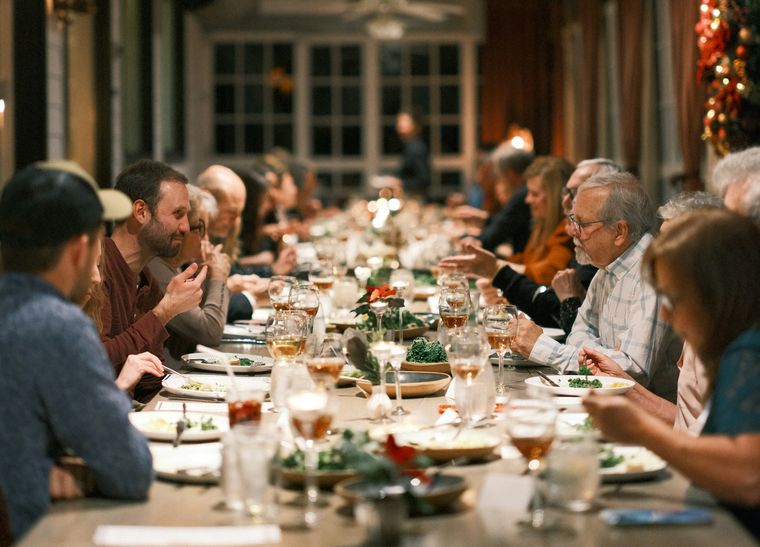
Holiday meals bring everyone to the same table, and that matters more than it might seem. A review of 14 studies found that young people who ate family meals more often had lower rates of disordered eating, substance use, violent behavior and depressive feelings, and higher self-esteem and school success. Those are associations, and plenty else differs between families, but the reviewers concluded that regular family meals are worth encouraging.
Gratitude has a little evidence behind it too. In a set of experiments, people randomly asked to write down what they were grateful for showed better well-being on several, though not all, measures than comparison groups, with the clearest effect on positive mood. A gratitude round will not change anyone’s life on its own. It does tend to change the mood of the room.
Gratitude games
1The gratitude alphabet
Go around the table, each person naming something they are thankful for that starts with the next letter: A for apple pie, B for brothers (even the loud ones). X is a free pass. Children love being the one who gets Q.
2Pass the pumpkin
Pass a small pumpkin or gourd around the table. Whoever holds it says one thing from this year they are grateful for, then hands it on. Quiet guests can simply pass; nobody is put on the spot.
3Thankful leaves
Cut leaves from colored paper before dinner. Everyone writes one thank-you, folds it and drops it in a bowl. Read them aloud over dessert and let the table guess who wrote each one.
Story games
4Two truths and a tale, family edition
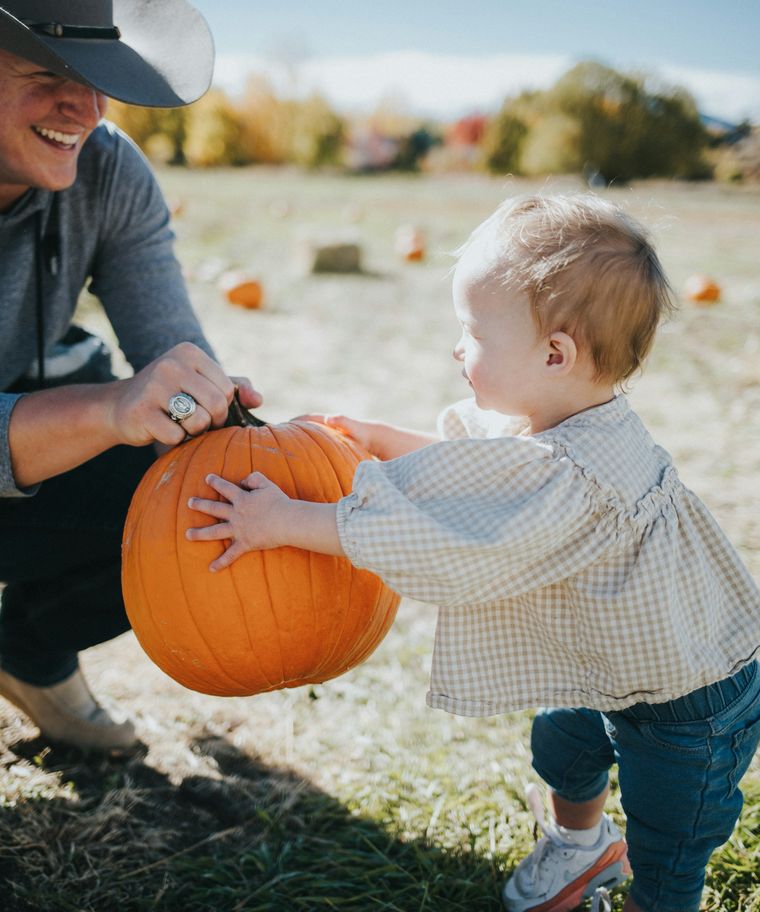
Each person shares three short stories from their own past: two true, one invented. The table guesses the tale. Grandparents tend to win, because their true stories are the hardest to believe.
5“The Thanksgiving I remember”
Ask the oldest person at the table to describe a Thanksgiving from their childhood: who cooked, where everyone sat, what went wrong. Then work down the ages. Children who know more of their family’s stories scored higher on self-esteem and family functioning in one study. That is a link rather than proof, but it is a lovely excuse to ask.
6Guess the year
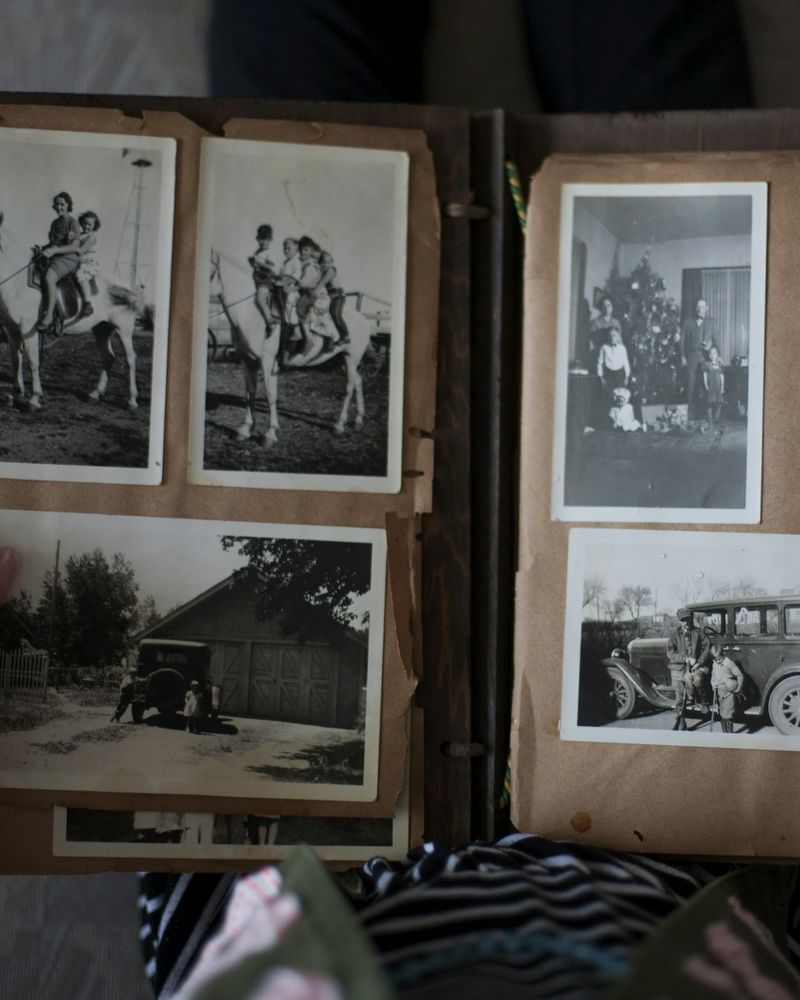
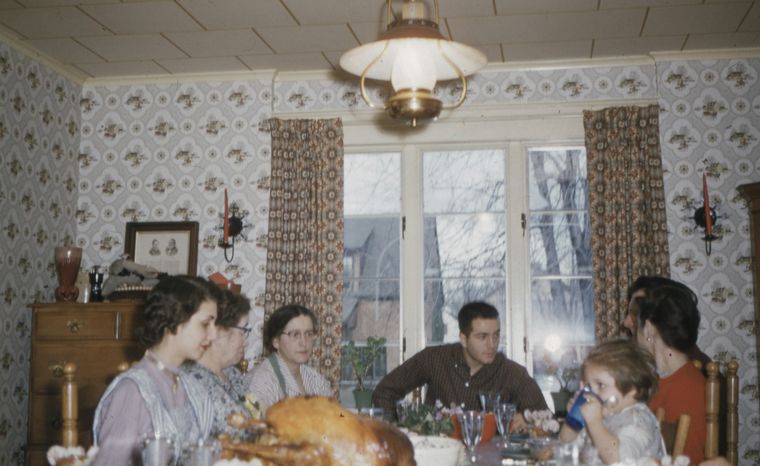
Bring out a handful of old family photos and have teams guess the year each was taken. The arguments about haircuts are half the fun, and the stories behind each photo are the other half.
7The ten-minute interview
Pair a young person with an elder and give them ten minutes and a short list of questions. StoryCorps launched the Great Thanksgiving Listen around this very idea in 2015, inviting people to record an interview with an elder or mentor, and interviews uploaded to its archive are preserved at the American Folklife Center at the Library of Congress. Our questions to ask grandparents are a good place to start.
The best part of Thanksgiving is often the half hour nobody planned.
Puzzle and paper games
8A kids’ table placemat with their names in it
Little ones finish eating long before the adults. A word search placemat with the cousins’ names hidden in the grid keeps them happily hunting; ours is a personalized Thanksgiving placemat that builds itself from the names you type and prints at home the same day.
9The word search race
Print the same puzzle for each team, mix the ages, and start the timer. First team to find every word gets first pick of the pie. Our free large-print Thanksgiving word search, giving thanks word search and football and parade word search all print with an answer key. If your holiday table is a soul food table, our Soul Food Word Search Book, Family Edition has 100 large-print holiday puzzles, from Thanksgiving to Kwanzaa, plus family pages made from your own names.
10Napkin trivia
Before dinner, write one family trivia question inside each napkin: “Who once drove three hours with the turkey on the roof?” Everyone reads theirs aloud over dessert and the table answers.
11Twenty questions, Thanksgiving edition
One person thinks of something on the table or in the house; everyone else gets twenty yes-or-no questions to guess it. It works for every age and needs nothing at all.
Conversation
12The question jar
Fill a jar with folded questions and let a child draw them out one at a time. A few that work across generations:
- What is a smell that takes you straight back to childhood?
- What was your first job, and what did you spend the money on?
- Who taught you to cook something?
- What is the best advice you ever ignored?
- If this family had a motto, what would it be?
Keeping it fun, not forced
- Keep rounds short. Ten minutes is plenty; stop while people still want more.
- Let anyone pass. A game should never feel like a test.
- Mix the ages. Put grandparents and grandkids on the same team, and give the quietest child the job of scorekeeper.
- Go first with the phones. Most parents know the pull: in one national survey, 68% said they are at least sometimes distracted by their phone when they are with their kids. A basket by the door works better when something more fun is waiting at the table.
When the plates are cleared and somebody’s grandmother is halfway through the story about the year the oven broke, you will know the games did their job. And if you want to keep that feeling going into December, here are 15 Christmas activities to share with grandparents.
Questions people ask
What games can you play at the Thanksgiving table?
Games that need no board and little setup work best: a gratitude alphabet, pass-the-pumpkin thank-yous, a family version of two truths and a lie, guess-the-year with old photos, napkin trivia, twenty questions, and a word search race in mixed-age teams.
Are there free printable Thanksgiving games?
Yes. Our free large-print Thanksgiving word searches print at home with an answer key and need no sign-up. Print one per team and race to find every word.
How do I get my family to put their phones away at Thanksgiving?
Ask kindly and go first. A basket by the door works for many families, especially when there is something better to do at the table, like a game that starts as soon as plates are cleared. Keep one phone out for the group photo.
Where this comes from
- Harrison ME, Norris ML, Obeid N, et al. “Systematic review of the effects of family meal frequency on psychosocial outcomes in youth.” Canadian Family Physician, 2015;61(2):e96–e106. PubMed
- Emmons RA, McCullough ME. “Counting blessings versus burdens: an experimental investigation of gratitude and subjective well-being in daily life.” Journal of Personality and Social Psychology, 2003;84(2):377–389. PubMed
- Duke MP, Lazarus A, Fivush R. “Knowledge of family history as a clinically useful index of psychological well-being and prognosis: A brief report.” Psychotherapy, 2008;45(2):268–272. PubMed
- StoryCorps, “The Great Thanksgiving Listen.” storycorps.org
- Pew Research Center, “Parenting Children in the Age of Screens” (survey of 3,640 U.S. parents, March 2020), July 28, 2020. pewresearch.org